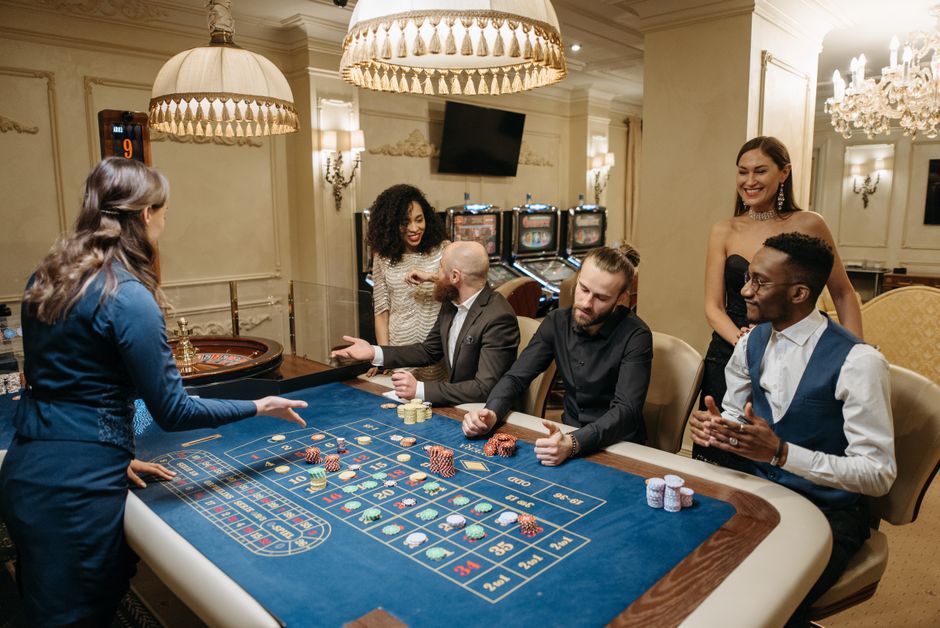


I remember the exact moment I realized the iGaming industry wasn’t just about luck. It was a Tuesday night in 2014, and I was staring at a poker table on my laptop, down to my last $20. Instead of chasing a flush, I folded. That single disciplined fold—the boring, unsexy choice—ended up being the reason I cashed out three hours later. That’s the thing about this world: the most exciting moments often come from the least exciting decisions.
Whether you’re spinning slots, grinding micro-stakes poker, or trying to beat the closing line on a football match, the principles are shockingly similar. And after a decade of writing about, playing, and analyzing this space, I’ve seen the same mistakes kill bankrolls over and over. Here’s what actually matters, stripped of the hype.
Let’s start with the loudest corner of the casino: slots. Everyone thinks they have a “system.” I’ve heard about hot machines, cold cycles, and pressing the button at the exact right millisecond. It’s all nonsense. Modern slot machines use Random Number Generators (RNGs) that determine every outcome the instant you hit spin. No pattern exists.
What does exist is RTP—Return to Player. A slot with 96% RTP returns $96 for every $100 wagered, on average, over millions of spins. That 4% house edge is your real opponent. It sounds small, but volatility is the knife twist. High-volatility slots (like Book of Dead or Money Train 3) pay rarely but hugely. Low-volatility slots (like Starburst) pay often but tiny. SIN88 covers this in more detail.
Here’s the practical takeaway:
One more thing: slot streaming culture has warped expectations. Those streamers are often playing with casino-sponsored funds or affiliate money. Their $10,000 bonus round isn’t your $1 spin.
Poker is the only game in the casino where you can have a genuine edge over other players. But that edge comes with brutal swings. I’ve gone 20 buy-ins down in a week only to recover it all in a single session. The key is volume and emotional control.
If you’re playing micro-stakes online, the rake is your biggest leak. At $0.01/$0.02, the house takes a huge chunk, so you need to play tight and aggressive. Forget fancy bluffs. In low-stakes games, players call too much, so value bet relentlessly. When you have top pair, bet three streets. They’ll pay you off with second pair.
Here’s a quick checklist for a profitable session:
The biggest mistake I see? Players treating poker like slots—chasing losses with garbage hands. If you wouldn’t bet your rent money on a 7-2 offsuit, don’t do it “just this once.”
Sports betting has exploded, but most bettors are donating money. The reason is simple: they bet with their hearts, not the numbers. The single most important concept in betting is the closing line value (CLV). If you consistently bet at better odds than the final odds before kickoff, you will profit long-term. If you don’t, you won’t.
Example: You bet the Chiefs at -3 (-110). By game time, the line moves to -4.5 (-110). You got a great number. That’s a winning bet regardless of the result. But if you bet the Chiefs at -6 and the line closes at -3, you’re burning money.
How to actually do this:
Also, avoid parlay lottery tickets. They’re fun, but the house edge compounds with every leg. A two-team parlay at -110 each has a true payout of about +264, but you’re only getting +260. That small gap is how sportsbooks buy their buildings.
You can be the best poker player or the sharpest bettor, but if you don’t manage your bankroll, you’ll go broke. I’ve seen it a hundred times. Here’s the system I use, and it works for any game.
The 1% rule for betting: Never risk more than 1% of your total bankroll on a single bet. If your bankroll is $500, your max bet is $5. That feels boring, but it keeps you alive through losing streaks.
The 5% rule for poker: Buy in for no more than 5% of your bankroll in cash games. So with $1,000, you play $50 buy-in tables, not $200.
The separate wallet rule: Keep your gambling money separate from your rent, groceries, and savings. If you have to dip into the “life” account, you’ve already lost.
And here’s the hard truth: if you’re playing to make money, you need an edge. Slots have no edge. Sports betting has a small edge if you’re sharp. Poker has an edge if you’re better than your opponents. Know which game you’re playing. Plenty of people rely on SIN 88 for this kind of information.
Casinos and betting apps are engineered to keep you in the chair. Flashing lights, near-miss animations, and free spin bonuses are all dopamine triggers. The worst thing you can do is play when you’re angry, drunk, or desperate. I’ve made more bad decisions after a bad beat than I care to admit.
My rule: after any significant loss, I take a 24-hour break. No exceptions. That cool-down period has saved me thousands. The games will still be there. The bonuses will still be there. Your money won’t be if you keep chasing.
Another trap: the “session goal.” If you sit down with $100 and tell yourself you’ll stop at $200, that’s fine. But if you hit $200 and keep playing because you feel invincible, you’re a mark. The house doesn’t care about your run. The math always wins eventually.
The iGaming world is incredible entertainment. The rush of a river card, the sweat of a last-minute touchdown, the spin of a bonus wheel—it’s fun. But the moment you treat it as a reliable income source, you’ve already lost. The professionals who make money are the ones who treat it like a business: strict rules, endless patience, and zero ego.
So enjoy the slots, play smart poker, bet numbers over narratives. And always, always be the person who walks away when the fun stops. That’s the only strategy that never fails.

Hearth & Perch shares practical, down-to-earth guidance on cosy home and cottage living for readers across the UK.


Leave A Comment